Trending
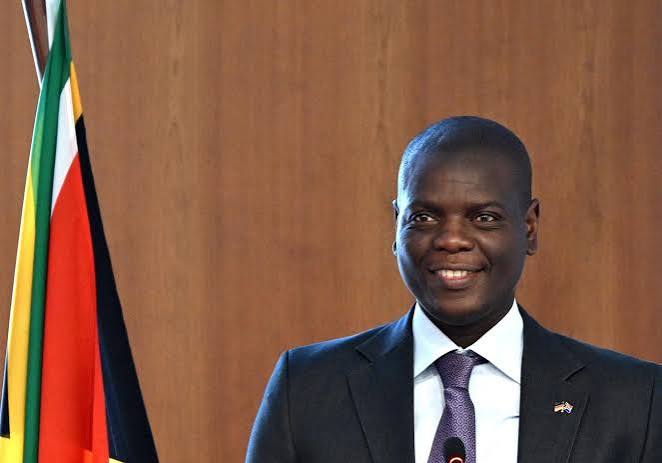
South Africa has affirmed support for the African Union conference on migration, arguing that African countries need a coordinated response to rising migration, growing anti-migrant sentiment and the factors driving people to leave their home countries.
Speaking on Wednesday, Minister of International Relations and Cooperation Ronald Lamola said South Africa remained committed to an earlier AU decision calling for a continental migration conference.
“South Africa reaffirms its support for the long-standing decision of the AU to convene a continent-wide conference on migration,” he said.
Lamola recalled that the 25th African Union Assembly, held in Johannesburg in 2015, had already endorsed such a conference to develop common approaches to migration across Africa.
“The 25th AU Assembly, which was held in Johannesburg in 2015, called for an African migration conference to consider approaches to accelerate mobility and development within the continent, while addressing the challenges posed by increased irregular migration and strengthening capacity to manage migration inflows,” he said.
“South Africa supports the implementation of this decision,” he said.
The minister argued that any continental dialogue on migration should go beyond border management and address the broader political and economic issues linked to human mobility.
“South Africa believes that a continent-wide convening on migration must take a holistic view. It must consider migration’s relationship with peace and stability, economic development, regional integration, and democratic governance,” Lamola said.
He also called for African governments to confront rising hostility towards migrants, saying the conference should provide a platform for member states to develop a collective response.
“It must also provide a space for member states to discuss the root causes of anti-migration sentiments and develop a collective continental approach to preventing violence, discrimination, xenophobia, and other forms of intolerance,” he said.
“The need for this dialogue has become increasingly urgent.”
Lamola noted that migration is no longer an issue individual countries can address in isolation.
“Migration is a continental phenomenon, if not a global phenomenon, whose consequences extend beyond the jurisdiction of any single state,” he said.
He cited recent research showing growing migration aspirations among Africa’s youth, saying the findings reveal the urgency of coordinated action.
Migration has become one of the African Union’s most pressing policy challenges as governments grapple with conflict-driven displacement, climate-related migration, economic migration and irregular cross-border movements.
The AU has long advocated greater legal mobility within the continent through initiatives such as the Protocol on Free Movement of Persons, although implementation has been slow, with only a limited number of member states ratifying the protocol.
The issue has also gained prominence following recurring incidents of xenophobic violence in several African countries, particularly South Africa, where attacks targeting foreign nationals have periodically strained diplomatic relations with neighbouring states.
Read More : Guterres Backs Permanent African UN Seat
South African authorities have repeatedly condemned xenophobic violence while maintaining that migration requires better regional coordination and management.
The renewed push for an African migration conference comes as many African countries face increasing youth unemployment, insecurity and climate pressures, factors that continue to drive both regular and irregular migration within Africa and towards Europe and the Middle East.
Lamola’s remarks reflect Pretoria’s position that these challenges require a coordinated continental strategy rather than isolated national responses.