Trending
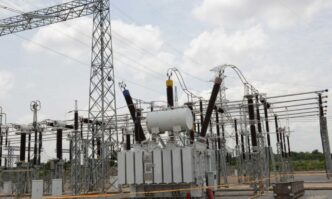
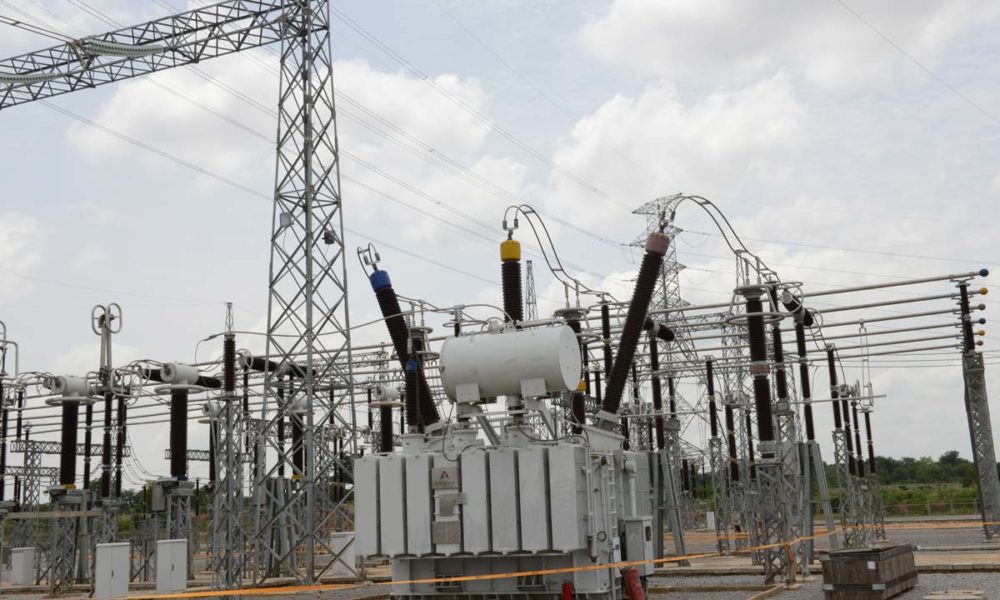
The electricity crisis in Nigeria has taken a downturn after the Government cancelled a $717.7 million in undisbursed World Bank financing, which was meant to improve power supply in the country.
The cancelled funds formed part of the $1.52 billion Power Sector Recovery Programme introduced to improve electricity supply, stabilise the sector financially, and address persistent tariff and infrastructure problems affecting consumers nationwide.
Details contained in World Bank restructuring documents showed that the programme was discontinued after several agreed reform targets were not achieved within the expected timeline.
According to the World Bank, the cancellation followed a formal request by the Nigerian government, with both parties mutually agreeing to end the remaining portion of the financing arrangement.
“The restructuring will result in the cancellation of the entire undisbursed balance in the amount of $717.7m equivalent, and no further disbursements will be made under the programme,” the bank stated.
The development has raised concerns about worsening power outages and growing strain on Nigeria’s electricity sector, which continues to struggle with poor distribution performance, transmission constraints, inadequate cost recovery, and recurring liquidity problems.
The programme, originally approved in June 2020 with an initial funding package of about $752.5 million, aimed to improve the reliability of the electricity supply, strengthen the financial stability of the power sector, and enhance accountability among key institutions.
Following what was described as early progress, the World Bank approved an additional $763.5 million financing package in June 2023 to support deeper reforms and tackle long-standing structural challenges within the sector.
The facility became effective in June 2024 and was scheduled to run until June 2027.
However, the World Bank said implementation under the additional financing arrangement remained “Moderately Unsatisfactory,” with only about nine per cent of the extra funds disbursed before the programme was eventually cancelled.
Financial records from the bank showed that under one component of the facility, just $41.24 million was released out of the approved $449 million, leaving more than $407 million undisbursed.
The World Bank linked the programme’s challenges largely to worsening economic conditions following Nigeria’s foreign exchange market liberalisation in 2023. The policy shift triggered a sharp depreciation of the naira and significantly raised the cost of gas used for electricity generation.
According to the bank, more than 70 per cent of power supplied to Nigeria’s national grid is generated using natural gas priced in United States dollars.
Despite rising production costs, electricity tariffs for most consumers remained largely unchanged, except for Band A customers whose tariffs were reviewed upward in April 2024.
The bank said the growing gap between electricity generation costs and sector revenues caused tariff shortfalls to rise sharply from N140 billion in 2022 to nearly N1.9 trillion annually in 2024 and 2025.
“Due to the mismatch between the electricity generation costs and the sector tariff revenues, the tariff shortfalls increased sharply in the last three years,” the report stated.
The World Bank also noted that Nigeria was unable to establish a credible financing framework capable of addressing the widening deficits and meeting the reform targets tied to the programme.
Despite the cancellation, the bank acknowledged that the initial phase of the programme recorded notable progress. According to the report, tariff shortfalls dropped by 71 per cent between 2019 and 2022, while cost recovery improved from 56 per cent to 94 per cent.
The report also stated that annual electricity supply to the national grid increased by 13 percent between 2018 and 2021.
The cancellation comes just days after the Accountant-General of the Federation, Shamseldeen Ogunjimi, warned that Nigeria could reconsider future World Bank loan arrangements if delays in approvals and disbursements persist.
Read More : Zamfara Police Arrest Youth Over Video Threat
Speaking during a meeting with a World Bank delegation in Abuja, Ogunjimi said prolonged delays could affect project execution and disrupt the country’s fiscal planning.
“If approvals take more than six months, the Nigerian Government may no longer honour such arrangements,” he said.
The World Bank has now moved the programme’s closing date from June 30, 2027, to May 31, 2026, effectively ending the initiative more than a year earlier than originally planned.