Trending


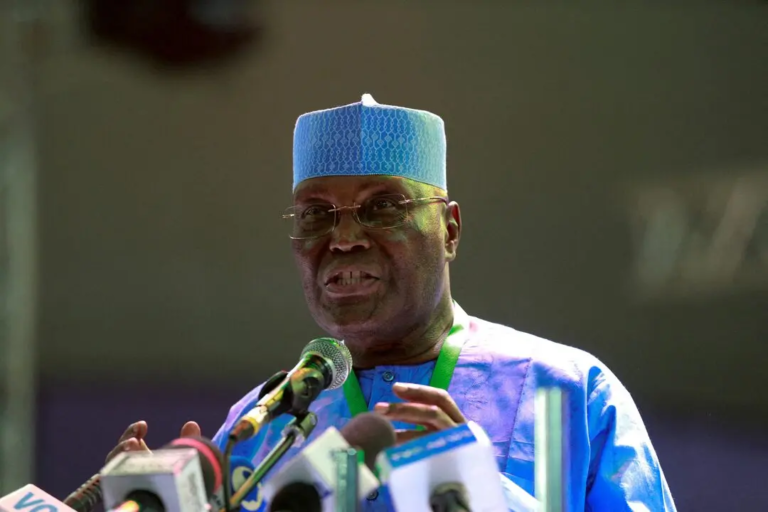
Former Vice-President Atiku Abubakar has criticised the Tinubu administration over declining household purchasing power, citing a Central Bank of Nigeria (CBN) survey which he said showed that many Nigerians could no longer afford homes, vehicles and other basic household assets.
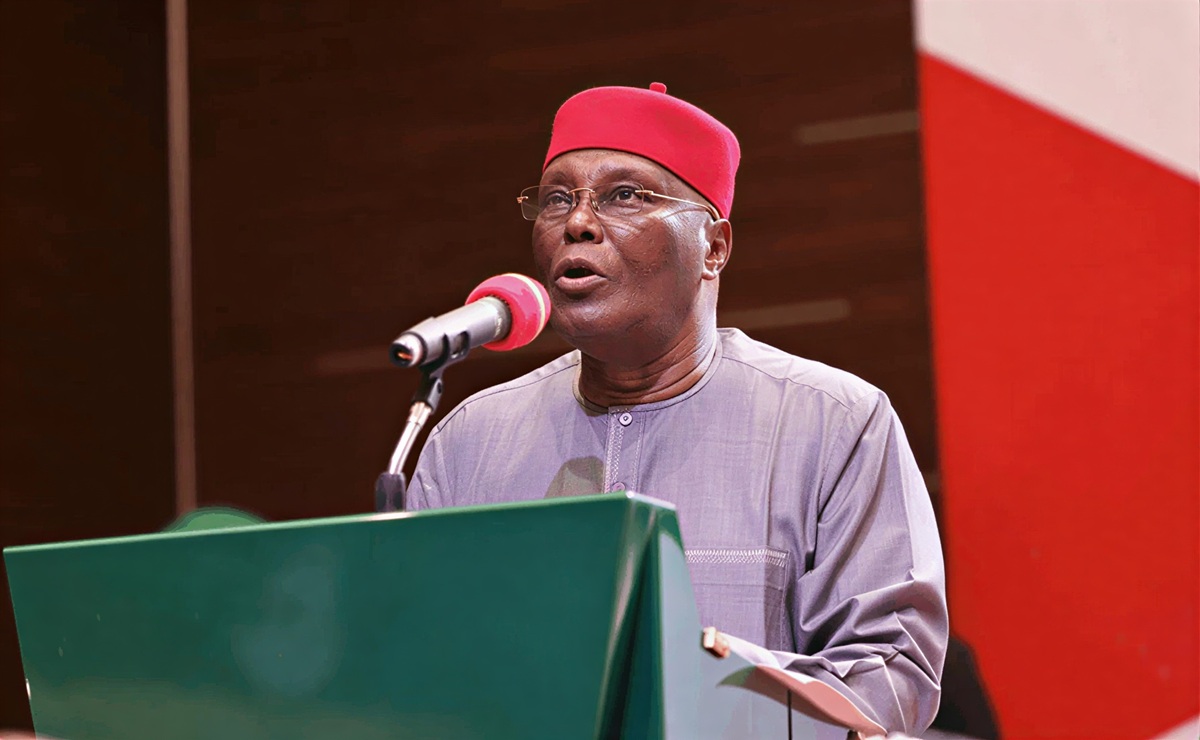
Atiku, the African Democratic Congress (ADC) presidential candidate, made the claim in a statement issued on Saturday by his Senior Special Assistant on Public Communication, Phrank Shaibu.
He said the latest CBN Household Expectations Survey contradicted the Nigerian Government’s claims of economic recovery, arguing that the findings reflected the financial difficulties facing Nigerian households.
Read More : INEC Restates Commitment To Fair Elections
According to the survey, buying conditions stood at 28.7 points for motor vehicles, 28.9 points for consumer durables and 30.0 points for buildings and landed property. Willingness to purchase vehicles was lower at 18.7 points, while willingness to buy buildings and landed property stood at 19.2 points.
Atiku said the figures were significant because they captured household expectations and purchasing decisions recorded by the apex bank.
He argued that the findings showed the economic crisis had gone beyond rising food and transport costs, with many Nigerians now struggling to acquire assets and improve their standard of living.
Atiku said Nigerians were increasingly being priced out of home ownership and vehicle ownership, while household appliances were also becoming less affordable.
“These are not figures manufactured by the opposition. They are the verdict of Nigerian households captured by the Central Bank under President Tinubu’s own government.
“What the figures tell us is simple: Nigerians are being priced out of decent living. A home is becoming a fantasy. A car is becoming a luxury. Household appliances are increasingly beyond reach,” Atiku said.
He added that many families were spending most of their incomes on food, transportation, electricity and school fees, leaving little room for savings or asset acquisition.
The former vice-president also cited the latest SBM Jollof Index as another indication of the pressure on household incomes.
According to the index, the ingredients needed to prepare a pot of jollof rice for a family of five cost an average of ₦29,578. Atiku noted that the amount represented more than 40 per cent of the ₦70,000 minimum wage.
He argued that the cost of preparing a single meal highlighted the difficulty faced by minimum-wage earners who must also cover rent, transportation, electricity, school fees and healthcare.
Atiku said the rising cost of food was now affecting Nigerians’ ability to meet longer-term financial goals, arguing that the CBN survey showed how the pressure on household incomes was also undermining aspirations for home and vehicle ownership.
“Only recently, the Jollof Index told us what Tinubu’s economy has done to the Nigerian kitchen. Now the CBN survey is telling us what it has done to the Nigerian dream.
“Tinubu first stole jollof rice from the family dining table. Now, his economy is taking away the house in which the table should stand and the car with which the breadwinner should get to work,” he said.
He criticised the administration for focusing on headline economic indicators such as GDP growth and foreign reserves while, according to him, failing to adequately address declining purchasing power.
“Government officials can celebrate GDP growth, foreign reserves and other statistics from air-conditioned conference rooms, but ordinary Nigerians have become unwilling economists, calculating every cup of rice, every litre of fuel and every transport fare before deciding what their families can afford.
“Between official statistics and empty cooking pots, the cooking pots do not lie,” he added.
Atiku said ordinary Nigerians were being forced to closely monitor the cost of food, fuel and transportation as they struggled to determine what their incomes could afford.
He also warned that declining consumer purchasing power could eventually hurt businesses and economic growth by weakening demand for goods and services.
The ADC candidate argued that the success of economic reforms should ultimately be measured by whether Nigerians could afford basic needs, save, acquire assets and improve their standard of living.
“An economy is not successful merely because government officials can quote favourable statistics. An economy succeeds when citizens can work, earn, eat, save, invest and progressively improve their standard of living.
“Before there is GDP, there must be dinner. Before there is prosperity, there must be purchasing power. And before a government congratulates itself on reform, ordinary citizens must be able to see and feel improvement in their own lives,”he said.
The Nigerian government has continued to defend its economic reforms, including the removal of the petrol subsidy and foreign exchange liberalisation, saying the measures are necessary to stabilise the economy, attract investment and lay the foundation for sustainable growth.
The government has also cited improvements in some macroeconomic indicators as evidence that the reforms are beginning to produce results, although households continue to face high food prices, transportation costs and other living expenses.
Atiku, however, maintained that economic recovery should be judged by its impact on the pockets and living conditions of ordinary Nigerians, rather than official statistics alone.
Read More : “Tinubu Hale And Hearty” – Onanuga
“President Tinubu should stop governing Nigeria through PowerPoint economics. The real economy is the Nigerian family’s pocket, and that pocket is increasingly empty.
“A government under which families struggle to afford jollof rice, workers cannot contemplate buying cars and millions see home ownership disappearing beyond the horizon cannot proclaim prosperity.
“Tinubu has not merely increased the cost of living. He has increased the cost of dreaming,” he added.