Trending
For much of his life, Frederick Teiko Ofori was rarely without his guitar.
So when the 40-year-old Ghanaian musician died in a road accident, his family chose a fitting way to honour him: they sent him to his final resting place inside a giant guitar.
The coffin, built in the shape of the instrument that had defined much of Ofori’s life, became the striking centrepiece of his funeral in Adjen Kotoku Amoama, on the outskirts of Accra.
Surrounded by mourners, bright red flowers and a portrait of Ofori, the oversized wooden guitar stood beneath canopies shielding guests from the afternoon sun.
The unusual coffin was anything but unusual in Ghana.
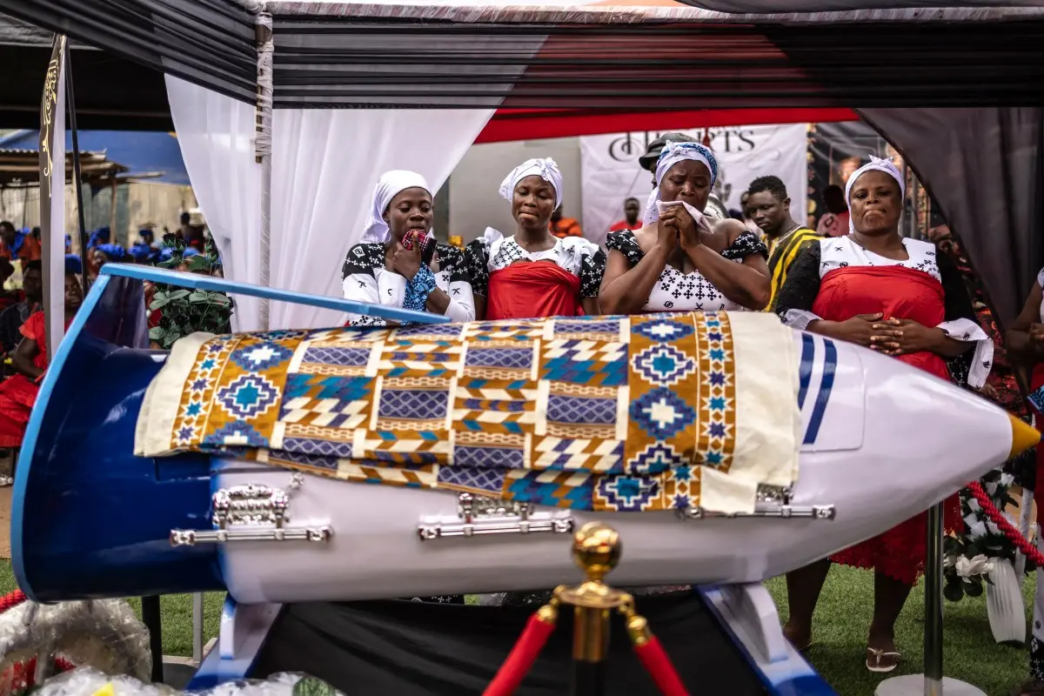
In the country, particularly among Ga communities around Accra, funerals can feature elaborate coffins designed to reflect the lives, professions, ambitions and passions of the dead.
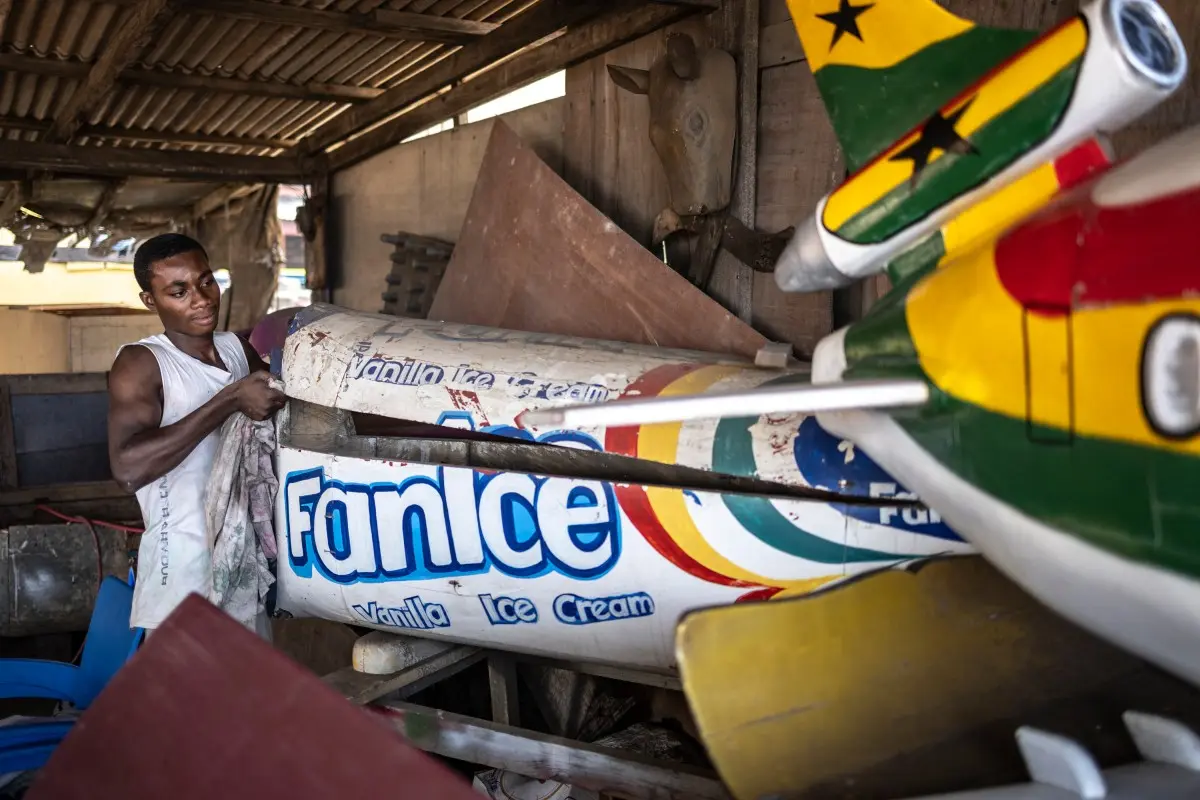
Known as “figurative” or “fantasy” coffins, the creations transform ordinary wooden boxes into elaborate sculptures.
Fishermen may be buried in giant fish or canoes, farmers in cocoa pods, drivers in cars and religious leaders in Bibles.
For Ofori, there was little doubt about what his final resting place should represent.
The musician left behind a wife, young children and a musical legacy that ended abruptly. His family also welcomed a new child just a week before the funeral.
But even in death, the guitar remained inseparable from his identity.
The craftsman behind the unusual coffin was Daniel Oblie Mensah, better known as “Hello”, who has spent more than three decades turning the lives of the dead into elaborate works of wood.
“Anytime someone commissions me to do a coffin in the profession of the deceased, it excites me,” the 54-year-old coffin maker told AFP.
“It helps me truly honour the deceased and the family.”
A life carved into wood
The tradition of sculptural coffins emerged among Ga craftsmen around Accra during the mid-20th century. Its origins are partly linked to the elaborate palanquins used to carry local chiefs.
Over the decades, the craft has developed into a distinctive form of contemporary art.
The coffins can take almost any shape imaginable, although their journey is often remarkably brief.
After weeks of careful work, the finished creation may spend only a few hours on display before being lowered into the ground.
Some, however, have escaped the grave.
A guitar-shaped coffin made by renowned Ghanaian artist Paa Joe is among the works displayed in international museum collections, including at New York’s Metropolitan Museum of Art, where it is on loan.
At workshops around Accra, craftsmen continue to receive commissions based on the lives of the people they are making coffins for.
Some families arrive with photographs or detailed drawings. Others simply tell the carpenter who the deceased was and leave the rest to the craftsman’s imagination.
For Samuel Commey Tetteh, the answer was a pen.
Tetteh, who was born in 1943, spent more than five decades teaching in Paanor, in Ghana’s Ga South area, according to his family.
Known locally as “Teacher”, he was dressed in white before his funeral began. Visitors gathered at the family home, greeting elders before approaching his body.
As the morning progressed, the quiet gave way to music and the arrival of his coffin: a giant pen.
Once again, Mensah did the work, spending about two weeks creating it.
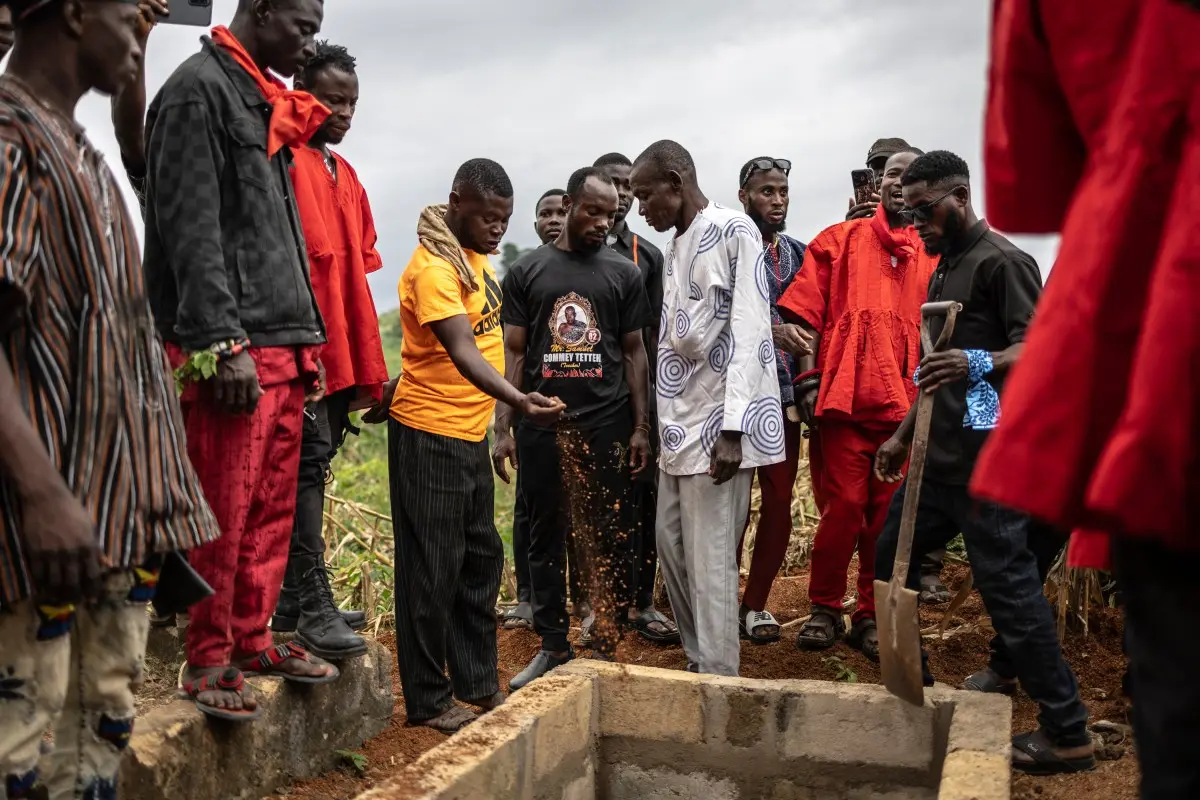
A sheep was slaughtered and its blood applied to the coffin as part of the funeral rites. Whatever amusement the giant pen might have inspired, the ceremony’s solemnity remained paramount.
Then they buried the coffin, taking the craftsman’s work with it.
From carpenter to artist
For craftsmen like Mensah and Lawrence Okoe Anang, creating these coffins combines woodworking with storytelling.
Anang recalls one of his most challenging commissions: a crocodile-shaped coffin ordered more than a decade ago for a priest in Ghana’s Volta Region.
His father built the coffin, while Anang, who began learning the trade at age 10, assisted in the workshop.
Now 26, Anang runs the workshop with his younger brother.
A typical coffin can cost around 10,000 Ghanaian cedis, or about $900, he told AFP.
Exhibition pieces cost more because they are built with materials designed to withstand decades of display.
The craft remains rooted in skills passed from one generation to another, but modern technology has transformed how the coffins are produced.
Power tools and other equipment have accelerated the work, while more reliable access to wood has made production easier.
International commissions from museums and collectors have also expanded the market beyond Ghana.
And the range of objects that can be reproduced in timber continues to grow.
A fish. An aeroplane. A Bible. A pen. A guitar.
Anang sees no contradiction in describing himself as a carpenter, coffin maker and artist.
At Ofori’s funeral, however, there was little time for debates about definitions.
Read More : ANC Faces Voter Backlash Over Municipal Failures
The people who loved the musician stood around his grave, saying goodbye to a man whose life had been closely tied to music.
At the centre of it all was the giant guitar.
Then, slowly, it disappeared into the earth.