Trending
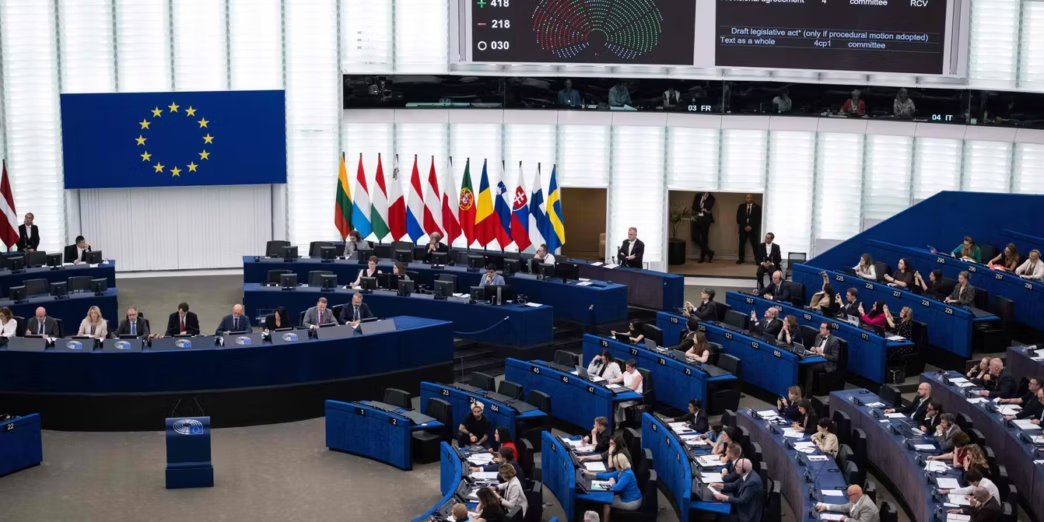
The European lawmakers have approved tougher migration rules that will give authorities wider powers to detain migrants and allow the creation of deportation centres outside the European Union.
Lawmakers voted 418 to 218 in favour of the reform on Wednesday in Strasbourg, marking one of the final steps before the new rules take effect.
The changes come as the European Union faces growing political pressure to reduce migration and speed up the return of people who do not have the right to remain in member countries.
Read More : UN Experts Condemn US Deportation Policy
Dutch lawmaker Malik Azmani, who sponsored the bill, welcomed the decision.
“Today Europe delivered. People rightly expect that those with no right to stay return to their countries of origin,” Azmani said.
The vote prompted strong reactions in the parliament. Far-right lawmakers celebrated the outcome, while left-wing members criticised the decision, highlighting deep divisions over the issue.

One of the key measures in the new law allows EU countries to establish “return hubs” outside the bloc, where migrants awaiting deportation can be sent.
Countries including Greece, Denmark, Austria, Germany and the Netherlands have already explored plans for such centres.
Greek Prime Minister Kyriakos Mitsotakis said on Sunday that agreements for the centres could be completed in 2026.
“Our goal is to conclude the first agreements for the creation of these structures in 2026, so that they are operational from 2027,” he said.
The proposal gained further support on Tuesday when most EU countries backed efforts to secure EU funding for the centres, although France and Spain opposed the move.
European governments have increasingly adopted tougher migration policies as concerns over migration continue to influence elections and strengthen far-right parties across the continent.
Read More : Volz Leads US Energy Push at AEW 2026
According to EU figures, fewer than 30 percent of people ordered to leave EU countries are eventually returned to their home countries.
French lawmaker Francois-Xavier Bellamy described the vote as a major milestone.
“This is a historic step for Europe and proof that change is possible,” Bellamy said, adding, “we are not condemned to powerlessness.”