Trending
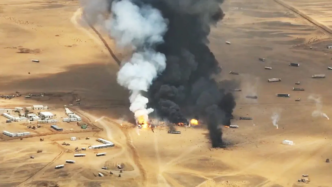
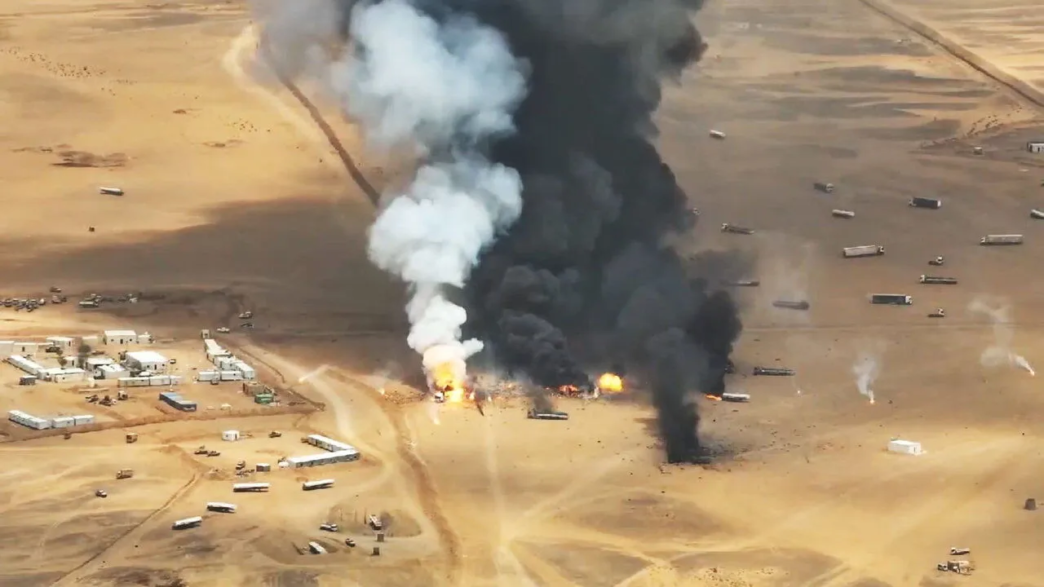
Yemen’s Houthi rebels have launched a new barrage of missile and drone attacks against Saudi military targets, further intensifying the country’s civil war as the wider Middle East conflict continues to disrupt regional trade and security.
The Houthis said they fired dozens of drones and missiles at Saudi Arabia on Monday, targeting military facilities including fighter jet hangars, radars, runways and ammunition depots at King Khalid Air Base in Khamis Mushait.
Saudi Civil Defence issued alerts in Khamis Mushait and Abha following the attacks. A resident of Khamis Mushait told AFP that he heard “intense blasts” and saw fires that continued burning for a “long time”.
“Honestly, we couldn’t sleep at all,” the resident said.
Houthi military spokesman Yahya Saree said the attacks were carried out in retaliation for Saudi airstrikes against targets in Yemen. He claimed Riyadh had conducted more than 300 airstrikes across Yemen in the past five days.
The Saudi-backed Yemeni government has also stepped up military operations against the Houthis. Government forces said on Sunday that they had recaptured positions in the southwestern province of Taiz and carried out airstrikes that killed at least 10 Houthi fighters, according to the official Saba news agency.
The renewed fighting comes as Iran faces accusations of supporting the Houthi offensive. Tehran has long provided the group with weapons and technology, but Iranian officials deny directing its military operations.
“Iran does not interfere in Yemeni affairs,” Foreign Ministry spokesman Esmaeil Baqaei said on Monday. He described the Houthis as “entirely independent actors” who make decisions based on their own interests.
The conflict has also placed renewed focus on the Bab al-Mandab Strait, a key shipping route linking the Red Sea with the Gulf of Aden. The Houthis have declared a maritime blockade against Saudi Arabia, while Iran continues to restrict shipping through the Strait of Hormuz.
The disruption has affected Saudi oil exports to Asian markets, forcing shipments to rely increasingly on the longer route through the Suez Canal and around Africa.
The latest escalation follows four years of relative calm in Yemen’s civil war. The Houthis seized the capital, Sanaa, in 2014, prompting Saudi Arabia to lead a coalition in support of the internationally recognised government the following year.
The prolonged conflict has created one of the world’s worst humanitarian crises. The United Nations warned in 2025 that 17 million Yemenis were struggling to access enough food, while a further one million faced extreme hunger.
The renewed fighting has also displaced tens of thousands of people. The UN’s migration agency said on Sunday that about 86,000 people had fled their homes since the latest escalation began, with the figure rising by 10,000 in a single day.
More than 2,000 people have also crossed the Bab al-Mandab into Djibouti, according to the International Organisation for Migration, adding a new displacement burden to a conflict already marked by years of humanitarian suffering.