Trending
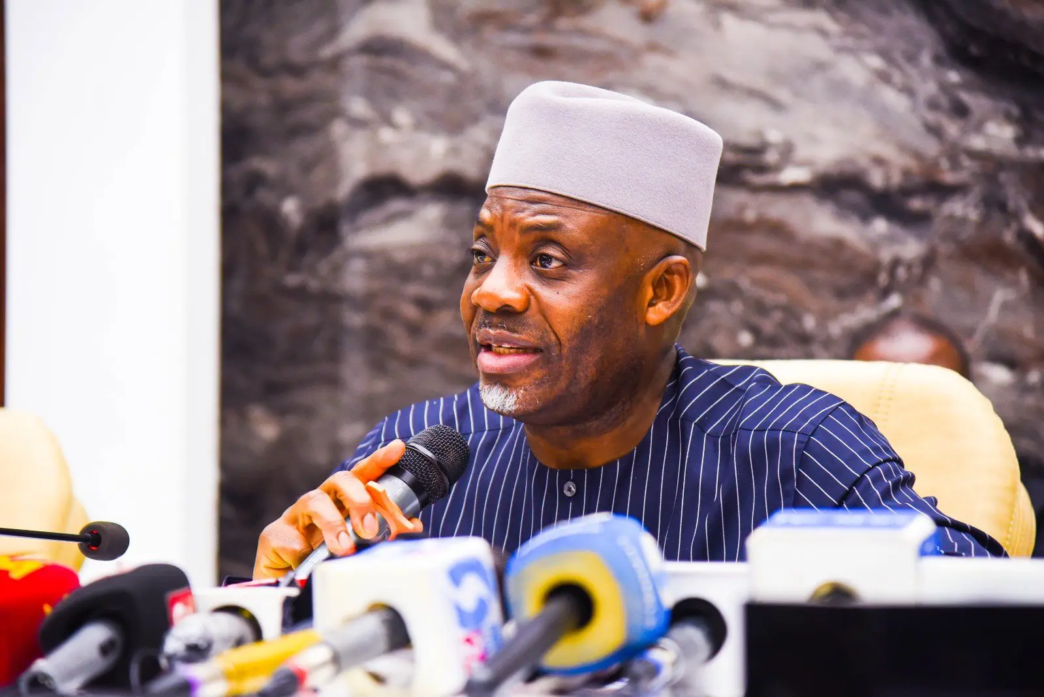
The Nigerian Government has announced that Nigerian students will receive 100MB of free daily data from October 1 for educational websites and digital learning platforms.
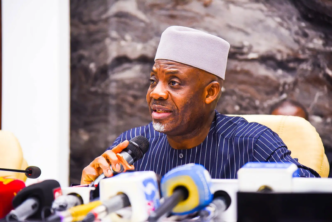
Education Minister Tunji Alausa announced the commencement date on Thursday at the launch of the Initiative for Zero-Rated Access to Educational Platforms and Content in Nigeria in Abuja.
“Let me let out the secret. This will be made available to Nigerian students from October 1st, 2026,” Alausa said.
The Nigerian Communications Commission (NCC) is implementing the initiative in partnership with telecommunications operators and the National Ministry of Education.
It will initially cover learners in public senior secondary schools and tertiary institutions before expanding to other learner categories.
Under the programme, participating mobile network operators will provide a daily 100MB zero-rated data allowance for approved educational websites and platforms.
The minister said the initiative would help reduce the cost barrier preventing many students, particularly those from low-income households, from accessing digital education.
“Our ambition must be that, ultimately, no Nigerian learner should be denied access to quality educational content simply because he or she cannot afford data,” Alausa said.
He said the initiative could turn mobile phones, tablets and computers into classrooms and digital libraries for students.
The NCC Director of Policy, Competition and Economic Analysis, Ayuba Shuaibu, said the National Ministry of Education and the commission would jointly approve platforms eligible for the programme.
These will include learning management systems, digital libraries, educational repositories, teacher development platforms, and technical and vocational training platforms.
“The framework also adopts the operator’s consult model for the initial rollout of the initiative. Under this model, a daily zero-rated data allowance of 100 MB will be provided by the participating MNOs for usage on approved websites and platforms,” Shuaibu said.
The programme will provide zero-rated access to selected learning resources for students in public secondary schools and public tertiary institutions.

Shuaibu said participating operators and platforms would also be required to comply with telecommunications laws covering cybersecurity, consumer protection, child protection and data protection.
The framework also includes safeguards on net neutrality, fair competition and inclusivity.
Earlier, NCC Executive Commissioner for Stakeholder Management Rimini Makama said millions of students could not access digital learning platforms because of affordability challenges.
“The Zero-Rated Access Initiative exists to erase that line. Its principle is simple: no learner should be shut out of educational content because of where they live or what their family earns,” Makama said.
She said the NCC, mobile network operators under the Association of Licensed Telecommunications Operators of Nigeria (ALTON), the National Ministries of Communications and Education, and other partners conducted research, testing and consultations before developing the framework.
Communications, Innovation and Digital Economy Minister Bosun Tijani, represented by Adetunji Adeyemo, described the initiative as a major step towards affordable and accessible digital education.
He pledged continued support for programmes promoting digital inclusion, affordable connectivity and access to knowledge.
The NCC Executive Commissioner for Technical Services, Abraham Oshadami, identified MTN Nigeria, Airtel Nigeria and Globacom among the major mobile network operators supporting the programme.
He thanked the operators for their “commitment to support its implementation by providing free data allowances for learners to access approved platforms.”
Alausa also said the government was developing measures to regulate internet access for children under 16, with further details expected later.
He said educational content available to children must be “appropriate, credible, safe and aligned with our educational objectives and our curriculum.”
The minister added that the government was expanding education-sector digitalisation through the Nigeria Education Data Infrastructure, Digital Nigeria Education Management Information System and Learner Identification Number.
He disclosed that more than 240,000 schools had been geo-mapped and geolocated nationwide.
The government is also digitising the Annual School Census to collect data on enrolment, teachers, classrooms, laboratories, libraries, connectivity and school safety.