Trending
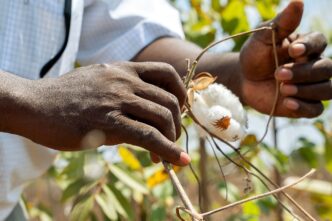
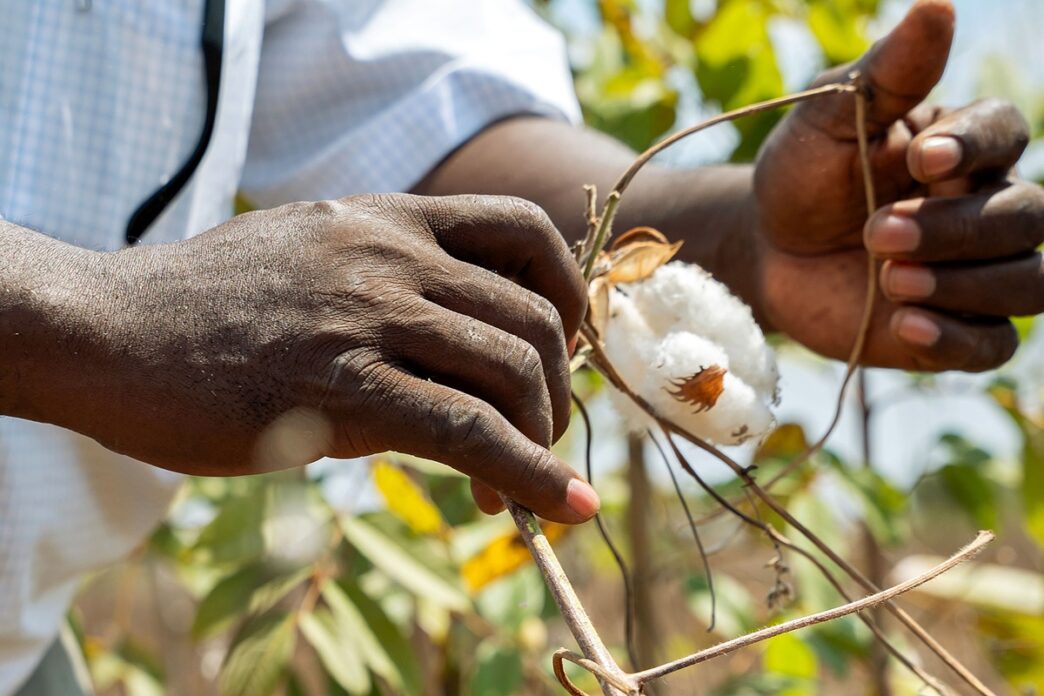
Cotton has always paid farmers for what they harvest. Its next payout may come from what stays in the soil, as carbon held on African farms could soon become a tradeable asset.
Farmers who qualify could earn up to $200 a hectare on top of whatever the crop itself fetches, a sum that in parts of West Africa can rival the harvest income it sits on.
The bid comes from the International Cotton Advisory Committee (ICAC), a Washington body that coordinates cotton policy across producing and buying nations.
Read More : ANC Faces Voter Backlash Over Municipal Failures
On April 30th, it announced a plan to pay growers for carbon rather than fibre, provided they change how they farm. That means planting cover crops, cutting back on ploughing, and working biochar into their fields.
Biochar is charred organic matter, plant waste burned under controlled conditions until it stops breaking down easily. Worked into soil, it holds water and carbon in place for years. Paired with less ploughing, which normally exposes buried carbon to the air and lets it escape, the combination keeps more carbon underground than conventional farming does.
The proposed model would convert cotton stalks and other eligible agricultural residues into biochar and compost, which would then be returned to agricultural soils.
Dr Keshav Kranthi, the committee’s chief scientist, explained that “biochar improves soil structure, stores water and nutrients and promotes microbial growth. It is a sustainable solution that has a positive impact on both the environment and the profitability of agriculture.”
But ICAC stresses that the initiative is “first and foremost a soil-health and regenerative-agriculture program.” Its Director of Communications, Mike McCue, told bird story agency that “carbon finance is intended to make those improvements affordable and sustainable for cotton farmers over the long term.”
The advisory framed this as a change that pays farmers on two fronts at once, techniques its Executive Director Eric Trachtenberg describes as within every farmer’s reach.
“With simple techniques, cotton farmers can improve the quality of their soil and at the same time sequester carbon in the soil for more than 100 years,” he said.
That buried carbon is what the advisory intends to sell. Already, firms worldwide buy credits each year to offset emissions they cannot cut directly, and a tonne of carbon kept underground is worth money to them regardless of whose field it sits under.
Foresters have been trading carbon for years. In June last year, the World Bank Group said the DRC earned $19.47 million for reducing 3.89 million tonnes of emissions in Mai‑Ndombe — the first instalment of a deal worth up to $55 million for cutting 11 million tonnes.
“A significant share of the funds will go to local communities and Indigenous peoples who are helping lead forest conservation efforts on the ground,” the lender said.
Cotton, meanwhile, a crop better known for depleting soil than restoring it, has not raked in such carbon-based earnings for farmers.
But selling that carbon means proving it exists, and proof is where earlier schemes stumbled. Audits of several forest protection projects found credits issued for carbon that was never actually saved, in some cases for trees that were never at risk of being cut down.
Airlines and consumer companies that bought those credits ended up holding paper that offset far less than claimed. The wider market has not fully recovered its credibility since.
The committee has handed that problem to Merago, a carbon market firm hired to track soil conditions on participating farms, check results against international standards, and manage credit sales once certified.
“The initiative is currently in the preparatory stage,” McCue explained. “We are discussing potential projects with implementing agencies in member countries.”
The next steps will register farmers, gather baseline soil information and work out how much biomass each area can supply.
They will then train local personnel, set up digital monitoring and send each project for independent validation under a recognised carbon standard.
That has prompted the committee to hold back on any timetable for issuing or selling credits until removals are properly documented, verified and certified. Early estimates suggest two to three credits a hectare each year, shaped by local conditions and the standard applied.
From there, Uzbekistan emerged as the natural starting point. Its cotton grows mostly on large, state‑organised farms, a structure that allows wide areas to be checked quickly and cheaply.
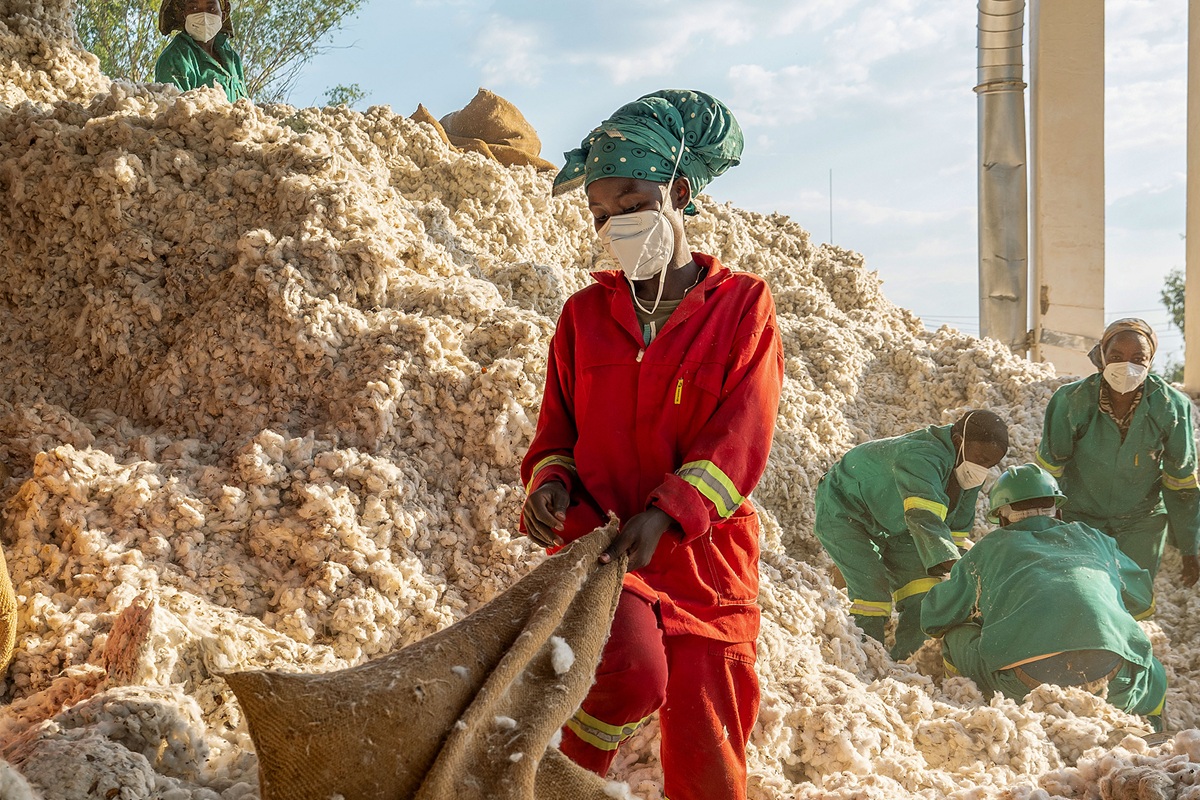
Africa, on the other hand, is the harder test. GIZ, Germany’s development agency, puts the continent’s share of global raw cotton exports at about 10% to 15%, with some four million households – encompassing roughly 20 million people – growing the crop, most on a hectare or two rather than the sprawling plots common in Uzbekistan.
Benin, Burkina Faso, Mali and Côte d’Ivoire rank among the world’s larger producers, and in each the crop is grown mainly by smallholders lacking the scale that made the Uzbek pilot simple to monitor.
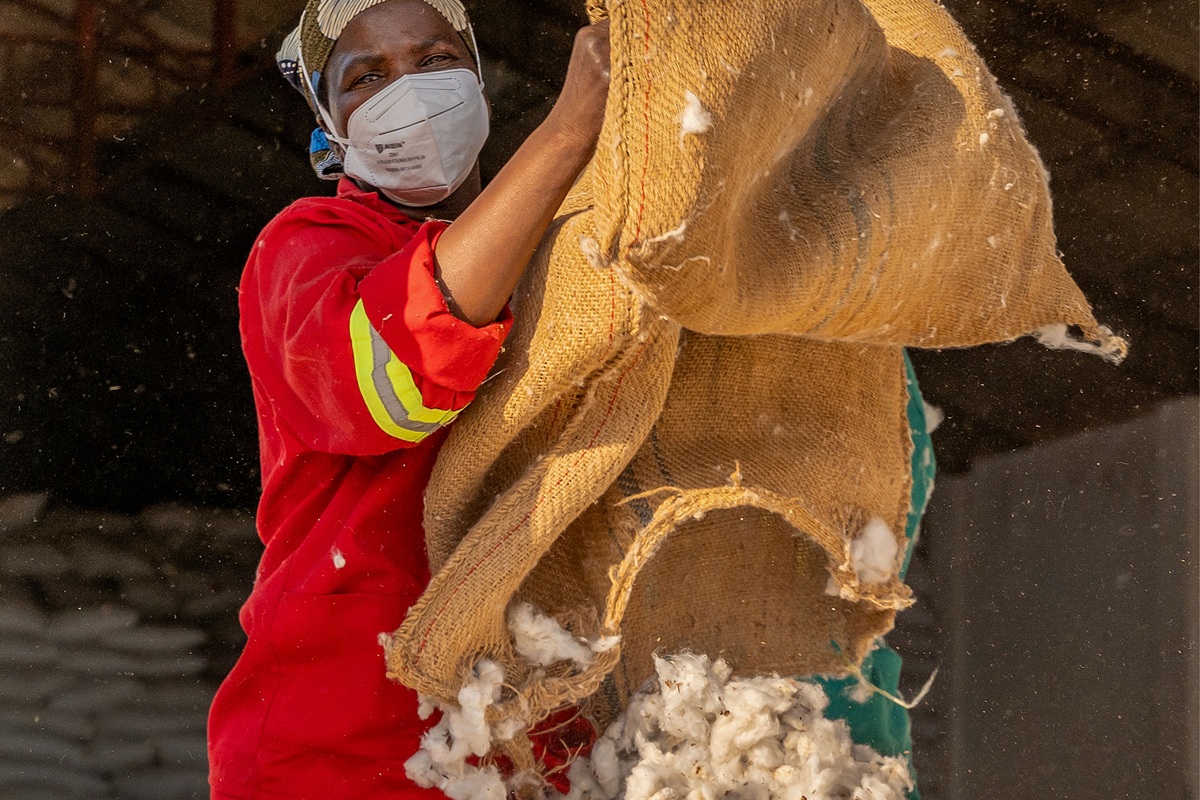
Checking soil carbon across thousands of small, scattered plots costs more per tonne than checking a handful of large ones. Someone has to group scattered farmers together to interest a buyer, and someone has to pay for testing before any credit is sold, since farmers themselves rarely have the cash to front it. The committee has not yet said who does either job.
Kranthi has pointed to this structural gap when discussing cotton sustainability schemes more broadly. Such verification, he says, “can be challenging in Asia and Africa because the crop is primarily grown by smallholder farmers,” who account for more than 90% of global cotton production.
For the Aid by Trade Foundation (AbTF), whose Cotton made in Africa (CmiA) standard already covers about 36% of African cotton production, the groundwork for such a transition is already being laid.
Holger Diedrich, the foundation’s project manager for communications, said that “farmers that are part of the Cotton made in Africa initiative already adhere to principles that reduce environmental impact and improve the quality of the soil.”
“These practices inherently contribute to carbon sequestration or emission reduction, making the transition to generating carbon credits more straightforward. They are already doing much of the groundwork.” Farmers, he added, can also benefit from a reduction or complete replacement of expensive fertilisers with biochar.
One thing favours African growers regardless, because soil farmed hard for years, as much of the continent’s cotton land has been, generally has more room to absorb new carbon than soil already well managed.
Land run down the most often has the most to gain, and gain is what the carbon market pays for. Under the right conditions it can take up carbon faster in its first seasons of recovery than land that was never depleted at all.
Asked about barriers to participation, the foundation stayed focused on the upside. “This initiative has the potential to be an ecological and economic game changer that radiates far beyond Africa,” Diedrich said.
“It could finally reward small-scale cotton farmers south of the Sahara for what they achieve every day.” Diedrich declined to offer advice for other markets weighing similar schemes, calling it premature this early on.
McCue also cautioned, saying the programme should not be sold as quick cash for farmers.
“Our aim is not to promote carbon credits as a quick or guaranteed payment,” he said, adding that the goal is a transparent system where carbon revenues support biochar production, composting, training and monitoring, with benefits shared under an accountable framework. ICAC’s main role, he said, will be to provide the technical knowledge, training and scientific support required to implement the program responsibly.
Read More : Kenyan Artist Revives Lamu Woodcarving Tradition
Whether that potential reaches an actual farmer depends on decisions the committee has not made public. The $200 figure is a ceiling reached under strong conditions, not a typical result, and its invitation for governments, companies and certification bodies to help fund the next phase suggests it cannot scale the programme alone.
What Uzbekistan has shown is that cotton can create a new revenue line when farmers rebuild their soil. Whether that revenue reaches a smallholder in Benin as reliably as it reaches a state farm in Uzbekistan is what the next phase will reveal.
Credit: Seth Onyango, Bird Story Agency.