Trending
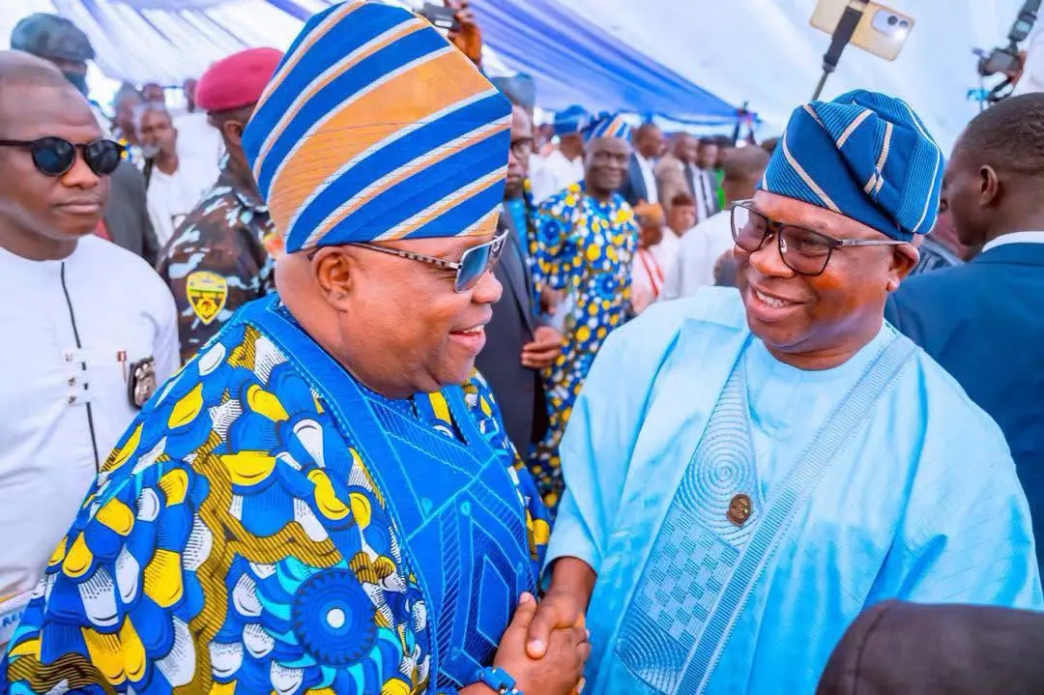
Osun State has always been one of Nigeria’s most politically restless states, the one Yoruba territory that refuses to fall in line with whichever party controls Abuja. That reputation is being tested again on Saturday, and the subplots make it perhaps the most personal election on the 2026 off-cycle calendar, because nearly every major actor in it has, at some point, been part of President Tinubu’s political family.
Osun’s electoral history since 1999 shows a state that has never let one party settle in comfortably: the Alliance for Democracy (AD) won it under Bisi Akande in 1999, the People’s Democratic Party (PDP) took it under Olagunsoye Oyinlola in 2003 and retained it in 2007, though that result triggered one of the state’s most consequential legal battles, which eventually installed Rauf Aregbesola of the AC/ACN in 2010-2011.
Aregbesola’s eight years reshaped Osun’s physical landscape, schools, roads, and the “Opon Imo” tablet scheme, but also left deep scars, most notably the half-salary (“Omoluabi” or “Afusat”) crisis that hit civil servants during a cash crunch. That resentment didn’t disappear; it resurfaced in 2022.
Read More : Oyetola Condemns Osun Post-election Violence
The Tinubu-Aregbesola-Oyetola Triangle
This triangle is the emotional core of Osun politics, and it explains almost everything happening this week.
Aregbesola and Tinubu were once as close as political allies get. Aregbesola reportedly said that after God and his mother, Tinubu was the most important person in his life and was one of the few lieutenants trusted enough to enter Tinubu’s bedroom unannounced.
Cracks allegedly began as early as 2010, when Tinubu effectively placed Gboyega Oyetola, a businessman and Tinubu’s cousin with no prior Osun political base, as Aregbesola’s chief of staff, seen by insiders as Tinubu positioning his own man inside Aregbesola’s government from day one.
By 2018, when Aregbesola’s tenure was ending, he did not want Oyetola as his successor and preferred his SSG, Moshood Adeoti, but Tinubu and the APC establishment pushed Oyetola through anyway.
Ahead of the 2022 election, Aregbesola turned fully against Oyetola, campaigned for Adeoti instead, and publicly accused Tinubu of having “turned himself to a god”. That APC ‘civil war’ which was Aregbesola’s “Osun Progressives” faction versus Oyetola’s “Ileri Oluwa” faction split the party and directly contributed to the APC’s defeat by Ademola Adeleke of the PDP in 2022.
Tinubu never appeared to forgive the betrayal; he pointedly avoided mentioning Aregbesola during his own 2023 presidential campaign in the state, and Aregbesola kept a conspicuous distance too and was frozen out of the APC’s inner circle afterwards.
That history matters enormously this weekend, because Aregbesola’s political son, Najeem Salam, former Speaker of the Osun House of Assembly, is now the African Democratic Congress (ADC)’s candidate, running as the vehicle for Aregbesola’s comeback and revenge against both the APC establishment and, indirectly, Tinubu’s camp. Salam’s fortunes rest heavily on whether voters still credit Aregbesola’s infrastructural record more than they resent the salary-crisis years.
Adeleke’s Dynasty and the Accord Gamble
Ademola Adeleke’s own rise is itself a story of inherited mandate: he entered politics in 2017 to fill the Osun West senate seat left vacant by the death of his brother Isiaka Adeleke, the founding father of the “Adeleke dynasty”, dynasty,” then lost the 2018 governorship to Oyetola before defeating him in an iconic comeback in 2022, riding the Aregbesola-APC implosion to victory on the PDP platform.
Now, four years later, Adeleke has abandoned the party that made him governor, citing an unresolved national leadership crisis inside the PDP, factional divisions and contradictory court rulings as his reason for leaving, and quietly completed his defection paperwork on November 4, 2025, joining the Accord Party by November 6, but delayed the public unveiling until after the PDP’s national convention so as not to be seen sabotaging it.
Adeleke insists he “loves PDP” but “had to protect” himself and his state, and draws a direct parallel to Tinubu’s own history of winning from opposition, a pointed reminder that Osun voters have rewarded outsider candidates before.
The gamble paid dividends structurally: six PDP federal lawmakers from across Osun’s constituencies defected to Accord alongside him, and the state PDP structure formally endorsed him under the Accord banner, with the state chairman directing “all structures to move en masse” behind Adeleke. But it also cost him allies after former governor Olagunsoye Oyinlola and other old PDP stakeholders who helped install Adeleke in 2022 defected to back APC’s Oyebamiji instead, arguing that “politics is temporary, but Osun State is permanent”, a fairly bitter parting of ways for people who once built his coalition.
The APC’s Candidate and the Federal-Might Question
Bola Oyebamiji (“AMBO”), until recently the Managing Director of the National Inland Waterways Authority, is the APC’s standard-bearer, effectively the establishment’s attempt to reclaim the state widely believed to be Tinubu’s ancestral home, using the full weight of a party that controls the presidency.
Three senatorial-district watchers note that Accord, APC and ADC camps have each claimed they’ll sweep all 30 local government areas, with battleground councils like Osogbo, Olorunda, Odo Otin and Ilesa East expected to decide the outcome.
But “federal might” has a mixed record in Osun specifically. The APC controlled the central government in 2022, and still lost, so a strategy built purely on “we control Abuja, therefore Osun belongs to us” has already failed once. Osun voters, this argument goes, have repeatedly shown they’ll vote against the federal tide, which is really the thread running through the state’s entire post-1999 history.
The Oddity of 2026: Three West Men, One Battleground
An unusual structural feature of this race is that all three leading candidates, Adeleke, Oyebamiji, and Salam, come from the Osun West senatorial district, turning its ten local governments (Ayedaade, Ayedire, Ede North, Ede South, Egbedore, Iwo, Ejigbo, Irewole, Isokan, and Olaoluwa) into the decisive battleground.
This has revived a quieter zoning grievance: Osun Central has produced three governors since 1999, while Osun West is currently enjoying its first governor in the democratic era, meaning voters in Osogbo and Ife, who’ve never produced their own governor, may factor that imbalance into their choice.
What’s Likely to Matter on Saturday
Turnout apathy: Osun turnout has fallen steadily from 45.74% in 2018 to a record-low 42.09% in 2022, even as voter registration keeps growing, a pattern shared by other off-cycle states. Low turnout tends to reward whichever machine can move its base to the polling units, favouring the incumbent (Adeleke) but also organised opposition structures.
The ADC as Spoiler: Analysts frame Salam’s run as a genuine “litmus test” for Aregbesola’s remaining influence, though the ADC’s poor recent showing in Ekiti’s governorship race (a distant third with just under 13,000 votes) tempers expectations of a big Osun surprise.
Endorsement Drift: Days before the vote, the APGA candidate Adesina Adeyemi-Doro withdrew and threw his support behind Oyebamiji, while the APM candidate Adebayo Adewale also stepped down from the race to back Adeleke, sharpening what’s increasingly described as a three-way — really a two-and-a-half-way — race.
Security and Credibility: INEC has scaled up to 5,130 BVAS devices and roughly 15,000 security personnel for the exercise, reflecting how tense observers expect this one to be. It also added that almost two million voters’ cards have been collected ahead of the polls.
The Historical Pattern: Osun May or May Not Repeat
What makes Osun genuinely distinctive in the Southwest is that it has punished sitting power more often than it has rewarded it. AD gave way to PDP, PDP’s tribunal-contested hold gave way to Aregbesola’s APC, and Oyetola’s APC gave way to Adeleke’s PDP, each time despite whoever was holding the federal centre.
If that pattern holds, an incumbent with a functioning grassroots machine and a fresh party platform (Adeleke/Accord) has real advantages regardless of APC’s national dominance. If it breaks and the “state of Tinubu’s roots” finally aligns with the ruling party at the centre, it would be the first time in over a decade that federal muscle has actually translated into an Osun governorship win and would mark a genuine turning point rather than a continuation of the old script.
Results are expected to start coming in from Sunday, August 16, with a formal declaration likely by Monday, August 17. Given how tight the pre-election numbers and rhetoric are, don’t be surprised if it comes down to those Osun West battleground councils and quite possibly ends up in a tribunal, which would be very on-brand for Osun.