Trending
The death toll from devastating glacial floods across the Himalayas has risen above 1,000, as rescue teams in Nepal and China continue searching for thousands of missing people, including hydropower workers feared trapped inside tunnels.
The disaster began after a high-altitude glacial collapse unleashed a massive surge of freezing water, rocks and debris downstream, destroying settlements, bridges, roads and power infrastructure. Authorities say 1,003 people have been confirmed dead across Nepal and China, while 4,462 remain missing.
Nepal has recorded the majority of the casualties, with 987 bodies recovered and 3,916 people still unaccounted for. Chinese state media has reported 16 deaths and 546 missing people.
Read More : Obama Blasts Trump at Democratic Rally
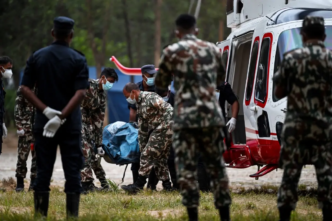
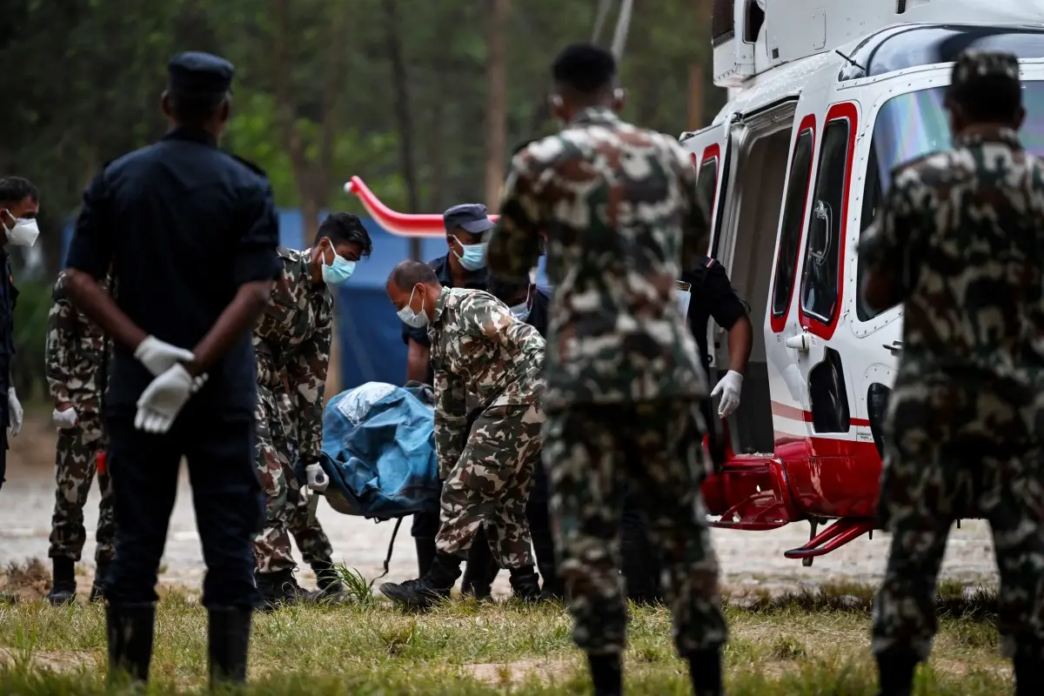
Rescue operations in Nepal have concentrated on hydropower tunnels, where around 100 workers are believed to be trapped. Teams have been digging, drilling and blasting through thick debris in difficult conditions, but only bodies have so far been recovered from tunnels blocked by sludge.
“We are focused on search and rescue efforts at the tunnels, our work is continuing,” Nepal Army spokesman Raja Ram Basnet said, adding that soldiers were also collecting bodies to reduce the risk of disease.
Mortuaries have struggled to cope with the number of victims, prompting authorities to begin burying hundreds of unidentified bodies after taking DNA samples. At least 17 bodies have also been recovered from rivers downstream in India.
For families of the missing, hopes of finding survivors are fading. In Kathmandu, relatives have posted photographs of loved ones outside a hospital as they search for information.
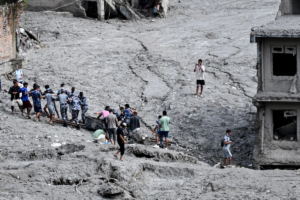
Debu Sapkota, 58, said his 83-year-old mother-in-law and granddaughter were swept away in Trishuli Bazaar while trying to escape the floodwaters. Although an alert had sounded, he said the elderly woman was “too old to run”, while her granddaughter tried to help her escape.
“I am here hoping to find their bodies,” Sapkota said, adding that he no longer believed they had survived.
The disaster has displaced entire communities, with survivors sheltering under makeshift coverings as heavy rainfall complicates rescue and relief operations. Dozens of bridges have been destroyed, roads severed and power plants damaged.
Nepalese Prime Minister Balendra Shah described the catastrophe as “unimaginable and heartbreaking” and linked the scale of the destruction to the growing effects of climate change.
“It is now time for us to strongly raise with the international community the issue of the disasters we are experiencing as a result of climate change,” Shah said.
Scientists have repeatedly warned that Himalayan glaciers are retreating as global temperatures rise, increasing risks for communities downstream. Nepal, despite contributing relatively little to global greenhouse gas emissions, now faces reconstruction costs that authorities say could reach billions of dollars.
Read More : Trump Casts Early Vote Before Midterms
Foreign nationals are also among those missing, including hundreds of tourists, trekkers and Hindu pilgrims from more than 30 countries.
In Tibet, more than 2,000 people are involved in rescue operations, according to China’s official Xinhua news agency. Teams are searching for survivors while repairing roads, restoring electricity and rebuilding communication links.
However, questions remain about the casualty figures Beijing has released. Tibetan advocacy groups have called for greater disclosure, while China’s foreign ministry maintains that it has released information about the disaster in an “open, transparent and timely” manner.