Trending


Qatar has rejected Iran’s justification for attacks on its territory, saying Tehran’s self-defence claims have no legal basis and do not shield it from responsibility under international law.
The Qatari Ministry of Foreign Affairs rejected Iran’s claims in two letters sent to UN Secretary-General António Guterres and France’s Permanent Representative to the United Nations, Jérôme Bonnafont, who is serving as president of the Security Council for September.
Qatar’s Permanent Representative to the UN, Sheikha Alya Ahmed bin Saif Al-Thani, delivered the letters in response to a communication from Iran’s acting chargé d’affaires to the UN.
Read More : Thousands Protest Journalist Arrests in Turkey
It said Iran’s attacks, which began on February 28, 2026, constituted “a flagrant violation” of international law and the UN Charter.
Doha cited Article 2(4) of the UN Charter, which prohibits states from threatening or using force against another state’s territorial integrity or political independence.
Qatar also invoked Security Council Resolution 2817, adopted on March 11, which condemned Iran’s attacks against Qatar and other countries in the region and demanded an immediate halt to the attacks.
The resolution was adopted by 13 votes to none, with China and Russia abstaining.
The Qatari government argued that Iran’s own reliance on the UN General Assembly’s 1974 definition of aggression undermined its position.
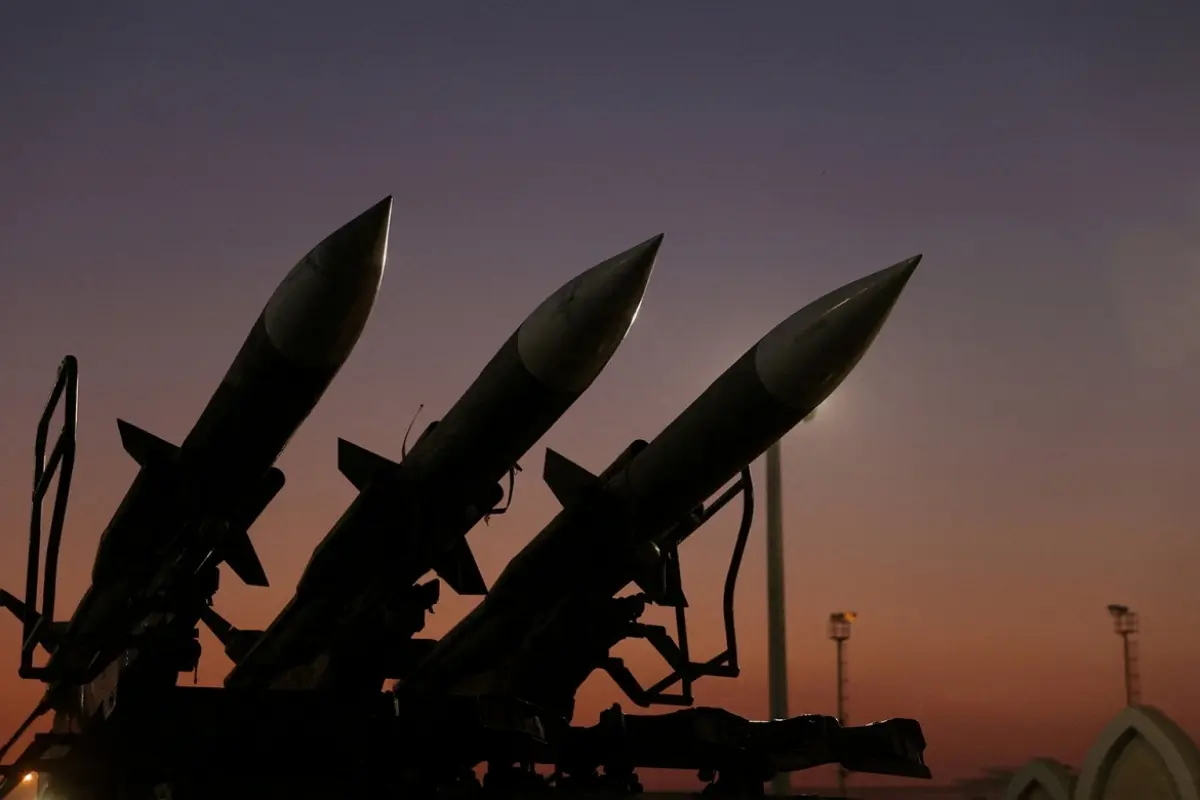
It cited provisions in the definition covering the bombardment of another state’s territory and the use of weapons against another state, arguing that these applied to what it described as Iran’s repeated missile and drone attacks on Qatar.
Qatar also said the definition covered the blockade of a state’s ports or coasts and argued that Iran’s closure of the Strait of Hormuz and disruption of maritime navigation fell within that provision.
Doha rejected Tehran’s invocation of the right to self-defence under Article 51 of the UN Charter.
“Nor can those acts be considered legitimate acts based on the right to self-defense,” Qatar said, arguing that the conditions for invoking Article 51 had not been met in relation to what it called the Iranian aggression against Qatar.
The government nevertheless reaffirmed its own right to self-defence.
Qatar said Resolution 2817 and Human Rights Council Resolution 61/1 affirmed the right of states to defend themselves, individually or collectively, against armed attacks by Iran.
Doha said it had repeatedly informed the Security Council of Iranian attacks on its territory and territorial waters, including incidents involving what it described as civilian targets such as energy infrastructure, tankers and commercial vessels.
Qatar accused Iran of violating the 1949 Geneva Conventions and Additional Protocol I, as well as principles of international humanitarian law that require protecting civilians and civilian objects.
It cited the prohibition of indiscriminate attacks, the principle of proportionality and the obligation to take feasible precautions to minimise civilian harm.
The Qatari government said Security Council Resolution 2817 had also condemned attacks on residential areas and civilian objects and referred to civilian casualties and damage to civilian buildings.
It said Iran therefore bore international responsibility for the consequences of its actions and would, where appropriate, be required to compensate Qatar for the resulting losses.
Qatar said it was still assessing and documenting the damage caused by the attacks and was “reserving all its rights” regarding the losses.
The government also rejected Iran’s demand that Qatar pay compensation, describing the claim as an attempt to shift responsibility for the conflict.
On the Strait of Hormuz, Doha reiterated its demand that Iran respect freedom of navigation, describing it as an established principle of customary and written international law.
Qatar rejected Iran’s attempt to use its claims concerning the strait to justify disrupting international navigation, threatening or attacking commercial vessels or invoking self-defence.
It said Resolution 2817 affirmed the navigational rights and freedoms of transport and commercial vessels under international law and recognised states’ right to defend their vessels against attacks.
The resolution also condemned actions or threats by Iran aimed at closing the Strait of Hormuz, disrupting international navigation or interfering with maritime traffic, as well as threats to maritime security in the Bab al-Mandab Strait.
Qatar described Iran’s allegations against it as “false and without foundation”, accusing Tehran of distorting established principles of international law and attempting to reverse the facts before the Security Council.
Doha also said the allegations were inconsistent with Qatar’s diplomatic efforts and mediation initiatives to resolve the conflict.
Qatar has previously lodged multiple complaints with the Security Council over Iranian attacks. In March, for example, Doha said its air defences had intercepted Iranian missiles and drones targeting the country and reported civilian injuries from subsequent attacks.
In July, Qatar again told the UN that Iranian attacks had continued, including a July 7 incident involving the Qatari vessel Al Rukiyat near the Strait of Hormuz and missile attacks on July 12 and 17.
Doha said the July 12 attack resulted in three injuries, including to a child, from debris following interception operations.
Qatar Rejects Iran Claims in Two Identical Letters to UN Chief and Security Council President
New York | September 04, 2026
Read More : Indonesia Cuts Gas Exports to Singapore
The State of Qatar has rejected Iran’s justification for attacks on its territory, saying the allegations have no legal basis and cannot absolve Tehran of…
— Ministry of Foreign Affairs – Qatar (@MofaQatar_EN) September 4, 2026