Trending
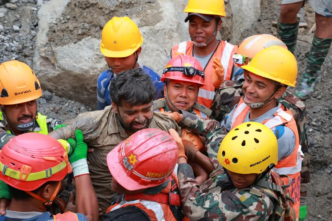
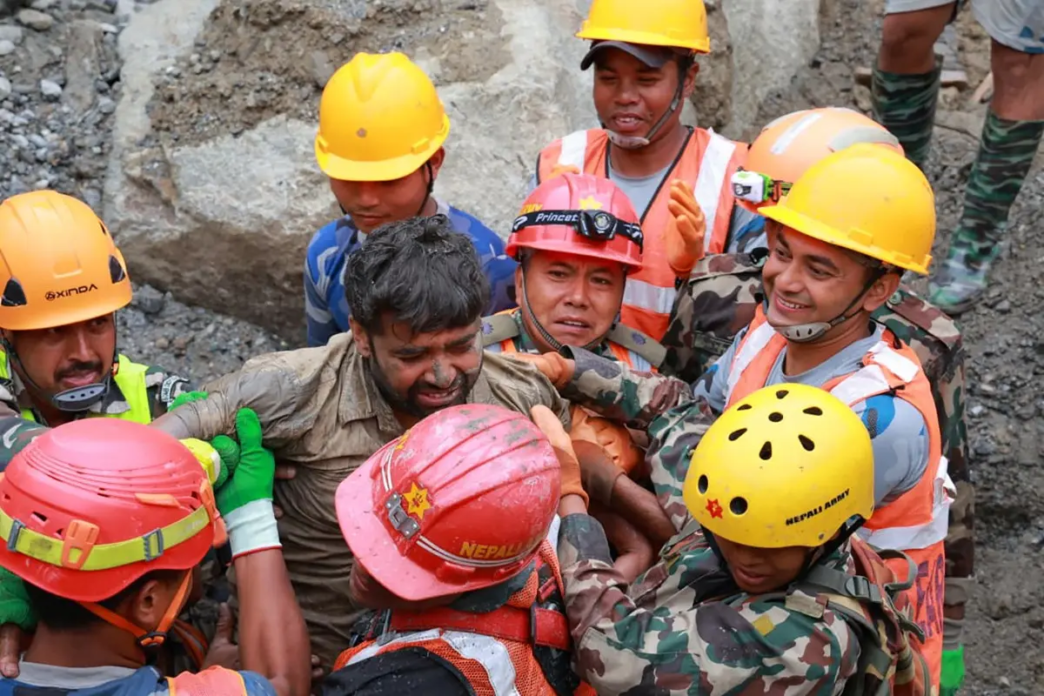
Two hydropower workers have been rescued alive from a debris-filled tunnel in Nepal, offering a rare breakthrough on the tenth day of search operations following catastrophic flooding and landslides in the Himalayan region.
The men, identified as 30-year-old mechanical foreman Sanjay Shah and 45-year-old mechanical supervisor Kabir Maharjan, were pulled from the Trishuli 3A hydropower tunnel on Friday after rescuers cleared a path through 50 to 60 metres of compacted debris.
Video released by Nepal’s energy ministry showed rescuers cheering as one of the men emerged through a muddy opening. Rescuers helped him to his feet before carrying him on the backs of emergency workers toward a waiting helicopter. A photograph of the second survivor showed him covered in mud, with his hands pressed together in prayer, as rescuers carried him away on a stretcher.
Read More : Melania Trump Announces Oleshky Ceasefire
Energy Minister Biraj Bhakta Shrestha described the rescue as a moment of hope, saying, “As long as there is breath, there is hope!” He added that rescue operations were continuing at affected tunnels and urged people to maintain their efforts and prayers.
The two workers were among hundreds who had been missing since August 26, when a massive glacial and rock collapse near the China-Nepal border triggered devastating floods and mudslides across mountain districts. At least 1,280 people have been killed, while more than 5,600 remain missing in Nepal and China.
The Nepalese government had initially said it believed more than 100 hydropower workers could still be alive inside tunnels buried by debris. However, repeated attempts to reach them were slowed by hard-packed mud and rubble.
Australian rescue expert Arnold Dix described Friday’s breakthrough as a return to “miracle country” after what he called a week of “24/7 heartache”. Earlier in the day, rescuers reported hearing a faint response from inside the Trishuli 3A tunnel. Dix said teams believed they heard someone respond with “hunchha”, a Nepali word meaning “yes” or “OK”.
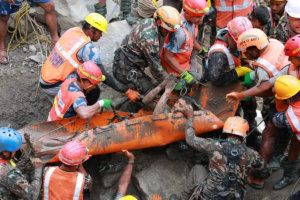
Less than an hour later, Shah and Maharjan were brought out alive. Maharjan was taken by helicopter to a hospital in Kathmandu and placed in intensive care, while Shah was reported to be in stable condition.
Their rescue brought relief to relatives who had waited anxiously for news. Amir Maharjan, Kabir’s brother, told AFP, “I am so happy, my heart is lighter.” Another relative, Lakshmi Naini, called the rescue “a miracle”, saying she initially struggled to believe reports that he was alive.
Rescue teams from Nepal, with support from experts from India, China and South Korea, continue to search other affected tunnels and sites. At least 12 hydropower projects were damaged or destroyed by the floods.
Read More : France to Deploy 70,000 Police Before Protests
The disaster has also left entire communities isolated, with roads, bridges and dams swept away. Foreign Minister Shisir Khanal has described the enormous wave of water and debris as a “Himalayan tsunami”.
The United Nations has warned that the scale of destruction is making humanitarian access extremely difficult, with cargo drones and porters being considered to deliver aid to communities cut off by the disaster.
For families still waiting for missing relatives, the survival of the two hydropower workers has provided a powerful reminder that rescue efforts can still produce unexpected breakthroughs.